stacktale▊
Java error logs were built in the ’90s for a human with grep — and for that reader they work. But the reader is changing: an AI assistant or an automated agent reads an error with no muscle memory, and every line is context and token cost. stacktale captures the failure at the source, structured for that reader — alongside your untouched logs.
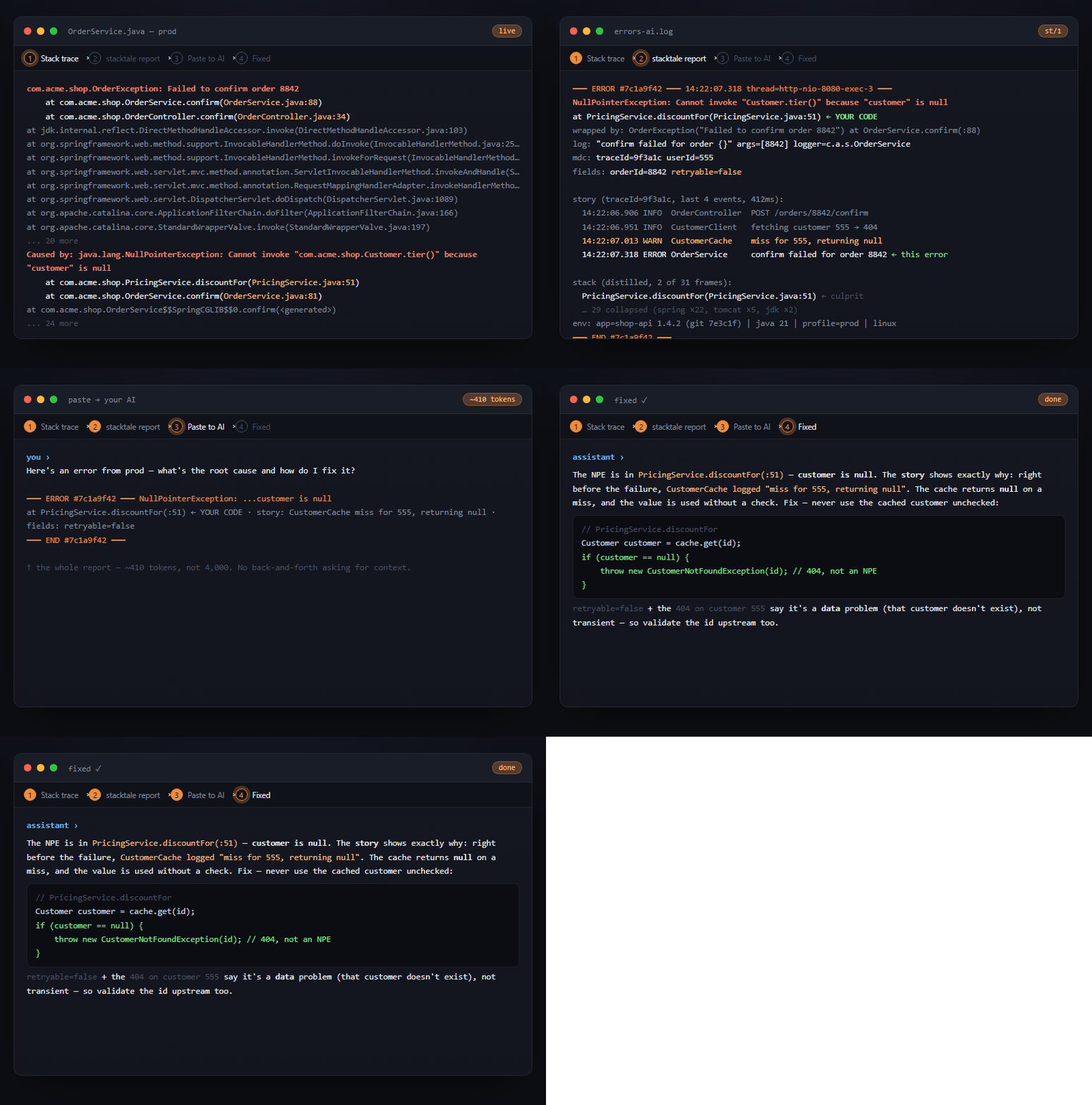
The Java stack trace hasn't changed since 1995. The reader has.
For thirty years the format was aimed at one reader: a human at a terminal with grep and a hunch. Then, quietly, the most frequent reader of an error log became an AI assistant — and nobody redesigned the log for it. Every pasted stack trace becomes an interrogation: what happened before? which values? which version? — ten messages of the AI asking for context that existed at the moment of the error and was thrown away.
Post-processing can't fix this — by the time the log is written, the story is already gone. The only place to capture it is at the source. That's the whole idea, and it's why a 1-line stack trace from 1995 and a stacktale report are not the same artifact at all.
One error, two ways to read it
A checkout dies on an NPE. The root cause — a cache miss returning null — happened three log lines earlier, buried under other threads.
ERROR o.a.c.c.C.[dispatcherServlet]
java.lang.NullPointerException: Cannot invoke
 "Customer.getEmail()" because "customer" is null
	at com.shop.OrderService.confirm(OrderService.java:87)
	at jdk.internal.reflect.DirectMethodHandle...
	at org.springframework.web.method.support.In...
	at org.springframework.web.servlet.mvc.method...
	at org.springframework.web.servlet.Dispatcher...
	at org.apache.catalina.core.ApplicationFilter...
	at org.apache.catalina.core.StandardWrapper...
	… 49 more framework frames …

(what happened before? which values?
 which version? — you'll be asked all of it)
━━━ ERROR #cddfa41c ━━━ thread=exec-5
NullPointerException: "customer" is null
at OrderService.confirm(:87) ← YOUR CODE
log: "checkout failed for order {}" args=[889]
mdc: traceId=70e1dfe7
fields: orderId=889 retryable=false

story (traceId=70e1dfe7, last 4 events, 412ms):
  INFO  OrderController  POST /orders/889/confirm
  INFO  CustomerClient   fetch customer 555 → 404
  WARN  CustomerCache    miss 555, returns null
  ERROR OrderService     checkout failed 889 ←

stack (distilled, 2 of 56 frames):
  OrderService.confirm(:87) ← culprit
  … 37 collapsed (spring ×24, tomcat ×13)
env: app=shop-api 1.4.2 | java 21 | linux
━━━ END #cddfa41c ━━━
Less to read, more to know
Counted with a real tokenizer on the artifacts of an actual dogfooding session — a Spring Boot app hit over HTTP until it failed seven ways.
a classic log grows with traffic · a report file grows only with distinct errors
Everything the moment of failure knew
Captured at the source and never thrown away — because by the time the log is written, the story is already gone.
Nine modules, pick what you run
-javaagent capturing method args at the throw site.One dependency. No config.
<dependency>
  <groupId>io.github.gabrielbbaldez</groupId>
  <artifactId>stacktale-spring-boot-starter</artifactId>
  <version>1.4.0</version>
</dependency>
That's it. Reports land in errors-ai.log; your console stays exactly as it was.
Let the assistant read them
The file is the artefact; the loop is the point. Your assistant fixes an error, re-runs the app or the tests, asks stacktale what changed, and repeats until it answers no new errors.
/plugin marketplace add stacktale/stacktale
/plugin install stacktale@stacktale
Cursor, Claude Desktop and anything else that speaks MCP: see mcp-setup.md. There are also IntelliJ and VS Code extensions, and a GitHub Action that posts the reports on a red build.